|
Previous health seminars
2012
Health Qigong: the Principles of Health Qigong and how we can
maintain health through its practise
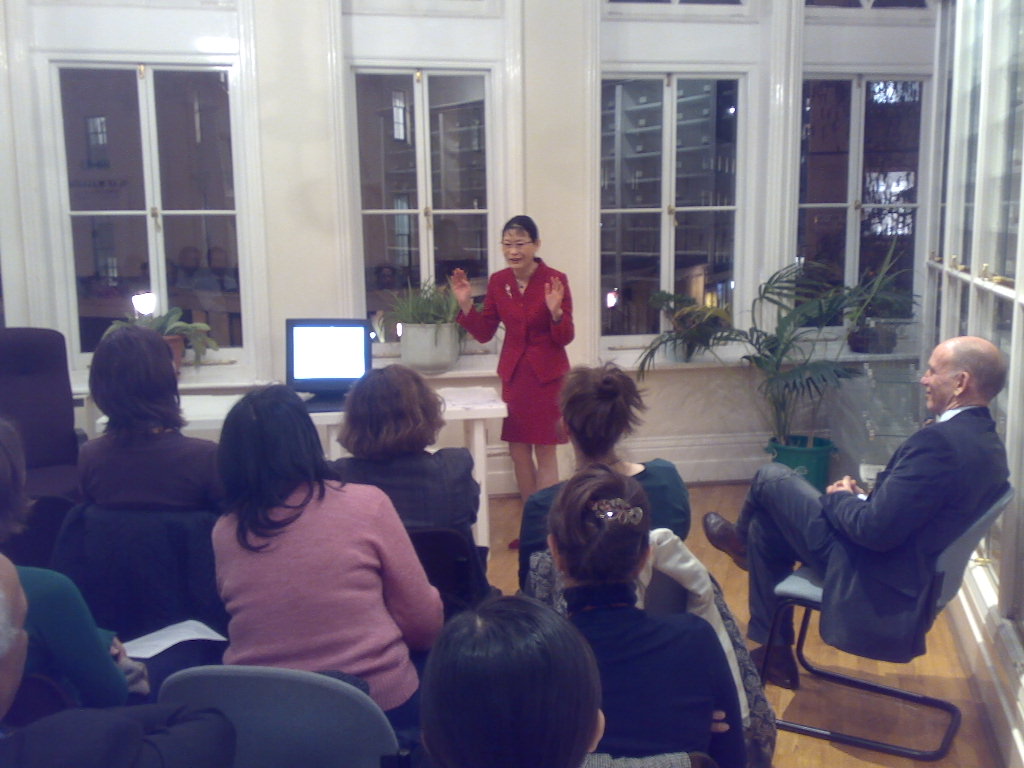
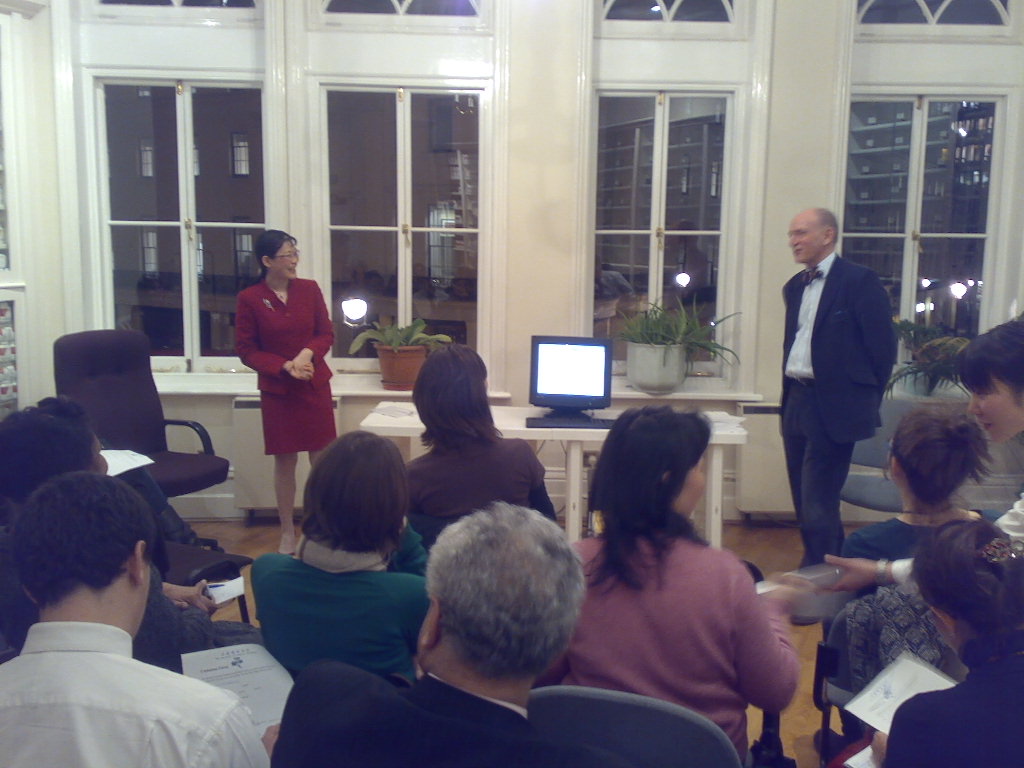
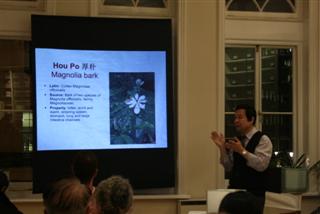
On Sunday 22nd April 2012, the Institute of Chinese Medicine
held another in our series of health seminars. This was given by
Master Liming Yue. Master Yue originally began the study of
Shaolin martial arts as a child in China in 1972. He achieved
the level of 7th Duan Wei Master and was officially awarded this
by the China National Wushu Association in 2004. He also holds
the position of Head Judge of Chen Style Tai Chi and Honorary
Vice-Chairman of the Tai Chi Union for Great Britain. Master Yue
also teaches Tai Chi skills at the University of Leeds medical
school, companies and schools, and was previously a part-time
lecturer at the University of Salford. Recently, Master Yue has
started to promote Chinese Health Qigong exercises and
cooperation with the China Health Qigong Association worldwide.
2011
Traditional Chinese Medicine and Nutrition
The Institute of Chinese Medicine recently held another
successful seminar on the subject of Traditional Chinese
Medicine and Nutrition. Topics included how to maintain health
through food from the perspectives of Traditional Chinese and
Western medicine, and what types of food should be preferred or
avoided with certain conditions. The speakers were Miss Kamay
Kan, who discussed the nutrition from recent western scientific
studies, and Dr Xiao Lan Deng, who discussed nutrition from the
TCM tradition. There was extensive participation from the
entire group during the discussion and audience feedback was
excellent.
Diabetes and High Blood Pressure from the Perspective of
Traditional Chinese Medicine
On 21st June 2011, the Institute of Chinese Medicine held a
seminar which focused on how Traditional Chinese Medicine can
help people with diabetes and high blood pressure.
This began with an excellent talk by Dr. Ting-Ming Li which was
well received by an audience that gave very positive feedback.
There was extensive participation from the entire group during
the discussion on the causes, prevention and treatment of these
common world-wide conditions.
2010
Health Qigong
On 25th July 2010, the Institute of Chinese Medicine held a
seminar on Health Qigong. Professor Cai Qin Zhang, who
sits on the committee of the Chinese Health Qigong Association
in China, demonstrated two forms of Health Qigong technique - Wu
Qin Xi and Ba Duan Jin, as well as providing some guidance to
beginners. She explained the functions and theories of
Health Qigong from both Traditional Chinese Medical and modern
medical perspectives. The audience feedback was excellent.
Click here to download Powerpoint slides from this presentation.
2009
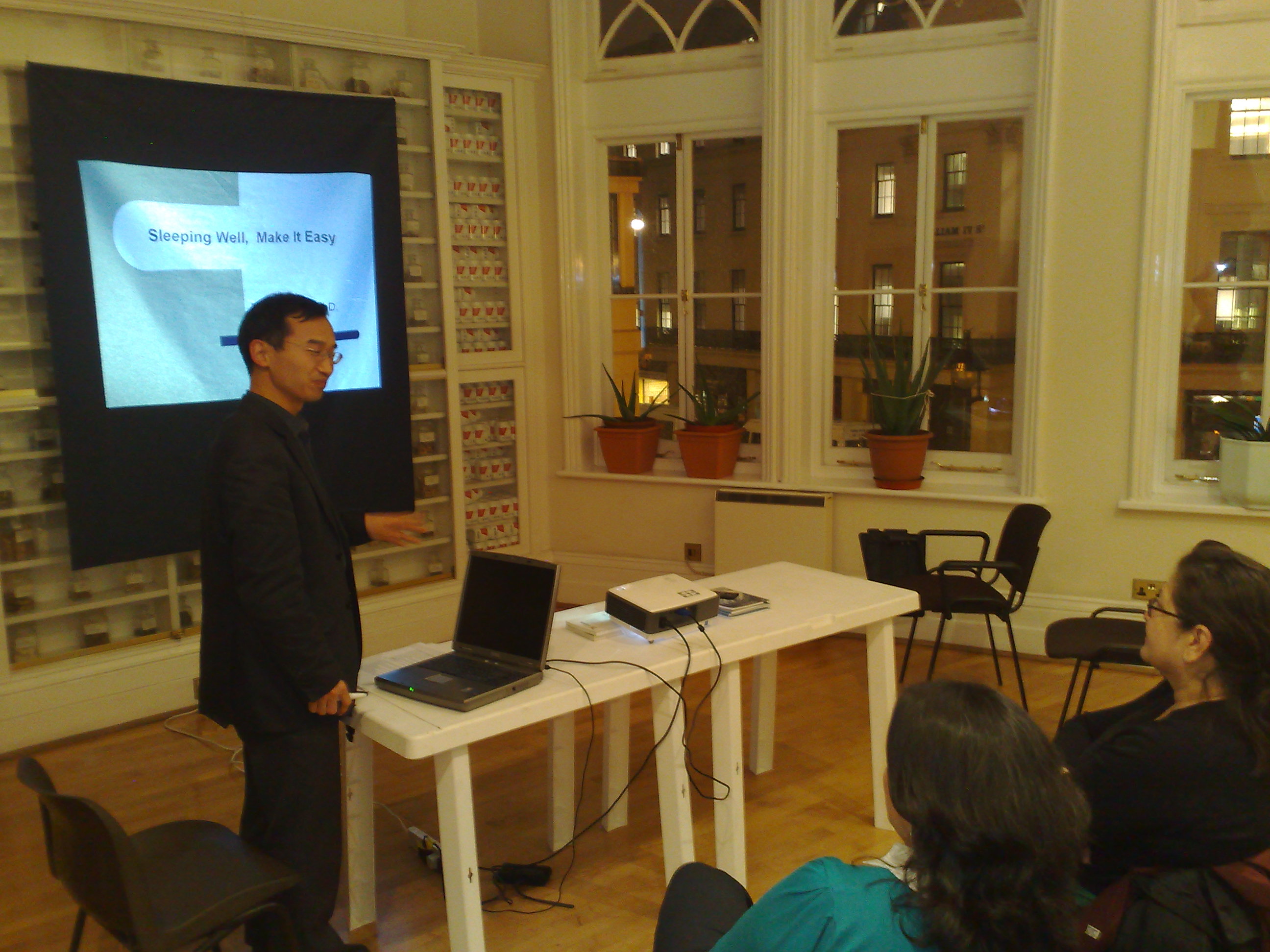
Insomnia and Traditional Chinese Medicine
On
24th November 2009, the Institute of Chinese Medicine held
another free seminar. Dr Fei Wang spoke on the topic of
"Insomnia and Traditional Chinese Medicine". A number of
questions from the audience were answered regarding the
relationship between insomnia and stress, diet and overwork.
Slides from the presentation are available below in Powerpoint
format:
Insomnia and Traditional Chinese
Medicine.ppt
Nutrition and Health
On Friday 21st August 2009, the Institute of Chinese Medicine
held a free health seminar on the topic of "Nutrition and
Health" from the perspectives of both conventional and
Traditional Chinese medicine. The speakers were Miss Kamay
Kan, who discussed the impact of diet on health using examples
from recent scientific studies, and Dr Helen Han Li, who
discussed nutrition and health from the TCM tradition.
Slides from both presentations are available below in Powerpoint
format:
Nutrition and Health in Conventional Medicine.ppt
Traditional Chinese Health Preservation.ppt
The principles and practice of Tai Ji
On
the 20th April 2009, Master S.X. Zhang led a seminar on Tai Ji.
This examined the principles and practice of the discipline.
The following is a summary of that seminar.
Tai Ji is an exercise that combines breath, motion and
concentration, benefitting organ function. One of
the most important factors in Tai Ji is the combination of
concentration and Qi (energy flow) with exercises such as
holding your knee level, pushing your palm and so on. Qi
is felt during the practice of Tai Ji because the body produces
energy which is transmitted through the nervous system after
stimulation both internally and externally.
The practice of breathing can regulate the nervous system,
massage the internal organs, smooth the circulation of Qi and
Blood, and enhance the metabolism. To achieve the
combination of concentration, breath and motion while practising
Tai Ji, the whole body must be relaxed. Standing at
attention, the mouth is closed, and while breathing slowly,
concentration is used to guide the breath, allowing the stomach
and internal organs to feel the Qi and stimulation.
During the practise of Tai Ji, practitioners usually have the
feeling of heat in the lower abdomen, often described as "Qi
Chen Dan Tian". This has similarities to Qi Gong as the
abdominal breathing technique used in Tai Ji, known as "Qi
practice", is shared. However, Qi Gong is a more
meditative discipline that is practised in silence, allowing
improved blood circulation and health. Tai Ji is more
active, using Qi to enhance physical actions, and therefore not
only promoting health but also allowing translation into the
defensive techniques of Kung Fu.
2008
Chronic
Fatigue Syndrome (Myalgic Encephalomyelitis)
On the 27th October 2008, The
Institute of Chinese Medicine held a seminar on the
subject of Chronic Fatigue Syndrome. This seminar looked at
the theories behind the causes of this condition and the
approaches to treatment by conventional and Traditional Chinese
Medicine.
The two speakers were Dr Shen Huijun and Dr Christopher Chiu. Dr
Shen is the president of the Association of Traditional
Chinese Medicine. He graduated from the Shanghai College
of Traditional Chinese Medicine and obtained his MSc from the
Beijing University of Traditional Chinese Medicine. He
currently teaches at the University of Lincoln, having published
widely on the anti-inflammatory effect of Chinese herbs. Dr
Chiu is a Specialist Registrar in Infectious
Diseases in west London. He has first degrees from both
Cambridge and Oxford Universities, and obtained a PhD in
immunology from Imperial College London.
Slides from both presentations are available below in Powerpoint
format:
Chronic Fatigue Syndrome in Conventional Medicine.ppt
Chronic Fatigue Syndrome in Traditional Chinese Medicine.ppt
|




.JPG)
.jpg)
.jpg)